What a quasar is
A quasar is a type of active galactic nucleus, or AGN, meaning the galaxy’s core is unusually energetic because material is spiraling into the black hole there. The light comes from the hot accretion disk and related jets or outflows, not from the black hole itself. Quasars are among the most distant observable objects because they are extraordinarily luminous, so we can still detect them across billions of light-years even though they are extremely far away. Their brightness comes from gas falling onto supermassive black holes, which can outshine the entire host galaxy.
How redshift is measured
Astronomers measure redshift by taking a spectrum of the object and identifying known emission or absorption lines, then comparing their observed wavelengths to their laboratory wavelengths. The standard redshift formula is z=(λobs−λrest)/λrest, or equivalently 1+z=λobs/λrest
Why quasars are useful
Quasars have very strong spectral lines, so their redshifts are relatively easy to measure even when they are extremely far away. Their large redshifts show that they are among the most distant observable objects and that the universe has expanded a lot while their light traveled to us.
Why distance does not hide them
Most galaxies are too dim to see at extreme distances, but quasars are bright enough to remain visible. That means they show up in surveys far out in the universe, where ordinary galaxies would fade below detection limits.
Why many are seen so far back in time
Looking at a distant quasar means looking into the past, since its light has taken billions of years to reach us. The highest-redshift quasars are seen when the universe was still very young, which is why they are such useful probes of the early cosmos.
Why there are many at high redshift
Quasars were more common in the early universe, when galaxies were closer together and mergers were more frequent, giving black holes more fuel to power them. As that fuel supply drops and galaxies evolve, the quasar phase eventually turns off, leaving a much fainter galaxy behind.
Can we see quasars in amateur telescopes?
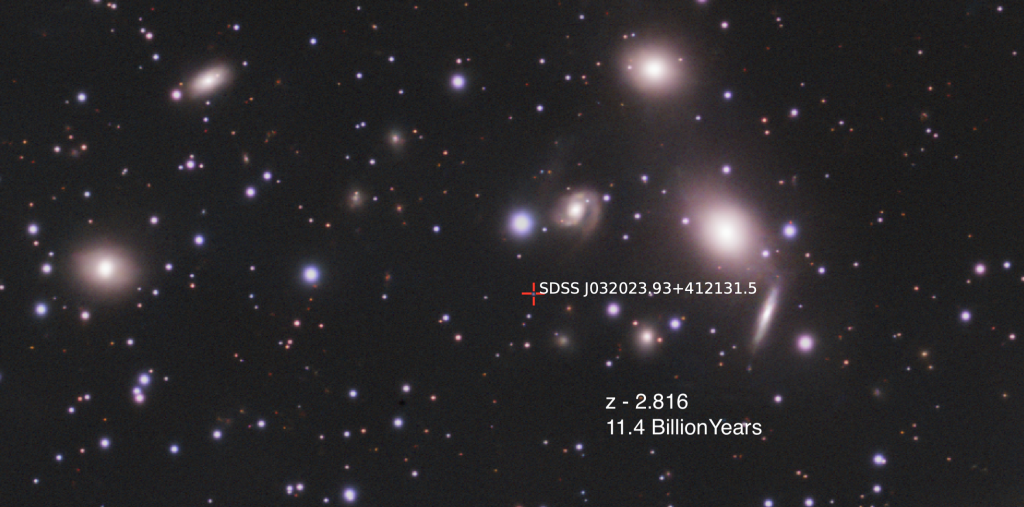
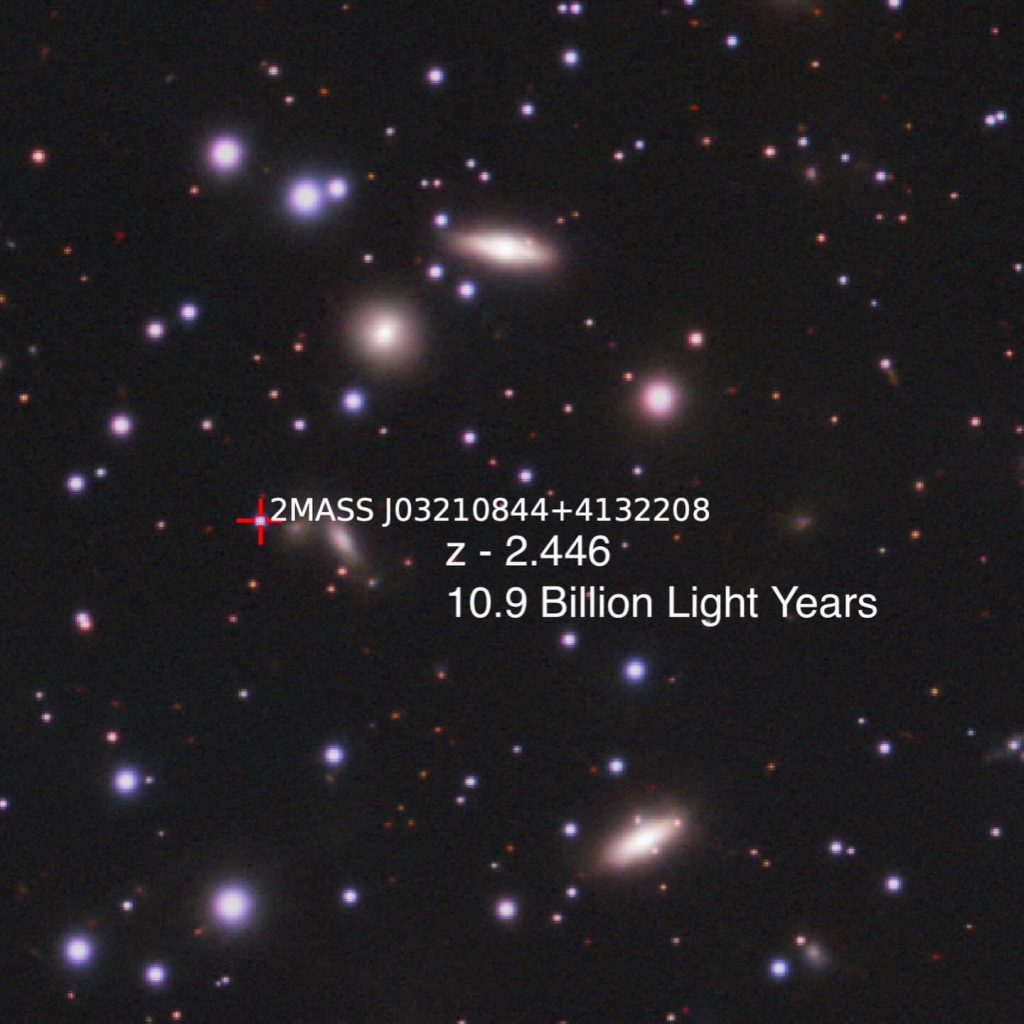
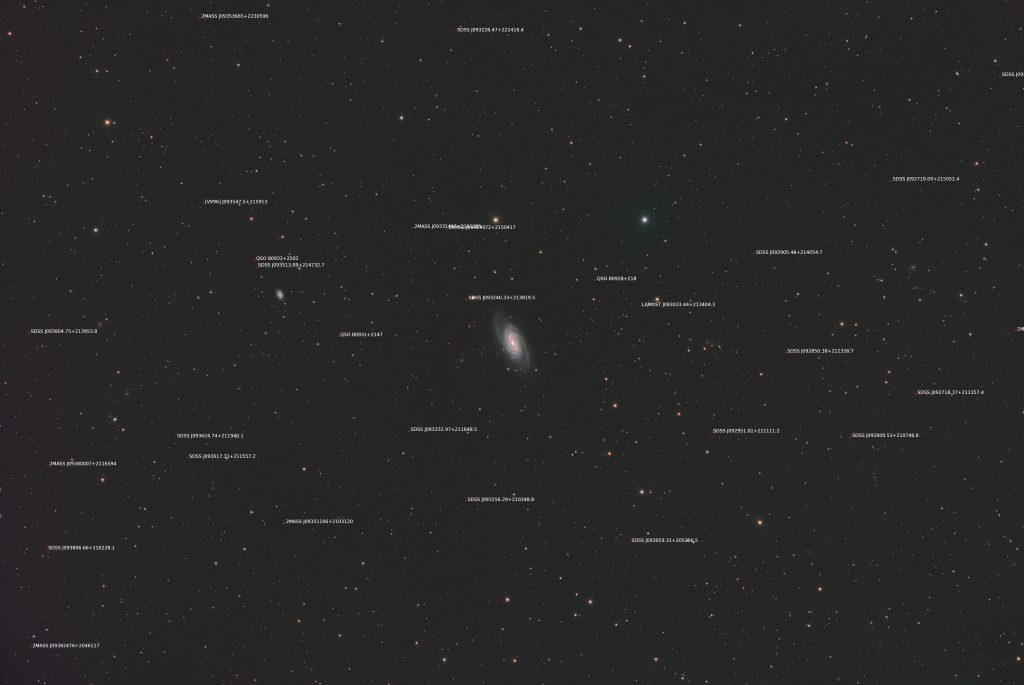
Yes we can here Are a few images I have taken with Quasars varying fro Redshift 0.385 to over 3